The transition to a health-optimized lifestyle often begins with a single change in the kitchen. Many beginners start by replacing their common white table salt shaker. They often switch to a glass grinder filled with rosy, crystalline rock salt. Consider the case of Emily, a thirty-seven-year-old struggling with persistent inflammation and failed crash diets. The realization that a physical transformation was necessary arrived with a sense of overwhelm. In the search for simplicity, the pink salt diet has emerged. It is a popular but misunderstood entry point into mineral-rich nutrition.
This dietary approach centers on the use of Himalayan pink salt. This substance is mined from ancient deposits in Pakistan. It is frequently touted for its purity and dense trace mineral profile. Social media often promotes the “pink salt trick” as a metabolic miracle. However, the true physiological impact requires a rigorous look at biochemistry and clinical evidence. We must examine electrolyte mechanics to separate marketing from medical reality.
Table of Contents
- 1 The Geological and Chemical Foundations of Himalayan Pink Salt
- 2 The Pink Salt Diet and Metabolic Transformation
- 3 Electrolyte Balance and Physical Performance
- 4 Digestive Health and the Acid-Base Myth
- 5 Comparative Analysis: Pink Salt vs. Alternative Salts
- 6 Clinical Evidence and Cardiovascular Risks
- 7 Behavioral Rituals and the Psychology of Weight Loss
- 8 Practical Integration of Pink Salt into a Healthy Lifestyle
- 9 The Future of Pink Salt in Clinical Nutrition
- 10 Conclusions and Recommendations
The Geological and Chemical Foundations of Himalayan Pink Salt
Himalayan pink salt is a variety of rock salt, also known as halite. It is primarily sourced from the Salt Range formation in northern Pakistan. The most prominent source is the Khewra Salt Mine. This mine is located approximately 800 feet underground. These deposits formed over 250 million years ago. This occurred during the Precambrian era when ancient inland seas evaporated.
These salt beds were trapped beneath volcanic ash and ice for millennia. Consequently, the salt remained protected from modern-day environmental pollutants. It is free from the microplastics and heavy metals that affect contemporary sea salts. This historical isolation supports the claim that pink salt is the purest variety available.
Structural Composition and the Role of Sodium Chloride
Himalayan pink salt is remarkably similar to refined table salt. Both substances are composed predominantly of sodium chloride. This is represented by the chemical formula NaCl. In refined table salt, the processing involves heavy bleaching. Manufacturers remove all secondary minerals to achieve 99.9% NaCl purity.
By contrast, Himalayan pink salt is typically hand-extracted. It undergoes minimal processing. This preserves its natural structure and trace element content.
| Component | Himalayan Pink Salt | Standard Table Salt |
| Sodium Chloride (NaCl) | 97% – 98% | 99.9% |
| Processing Level | Minimal/Unrefined | High/Refined |
| Additives | None | Anti-caking agents, Iodine |
| Color Origin | Iron Oxide (Rust) | Bleaching agents |
The characteristic pink hue is not merely an aesthetic feature. It is a direct result of trace iron oxide within the crystalline lattice. Proponents cite these minerals as the primary benefit of the diet. However, scientific scrutiny is required to determine their nutritional significance.
The Mineral Spectrum: Beyond Sodium and Chloride
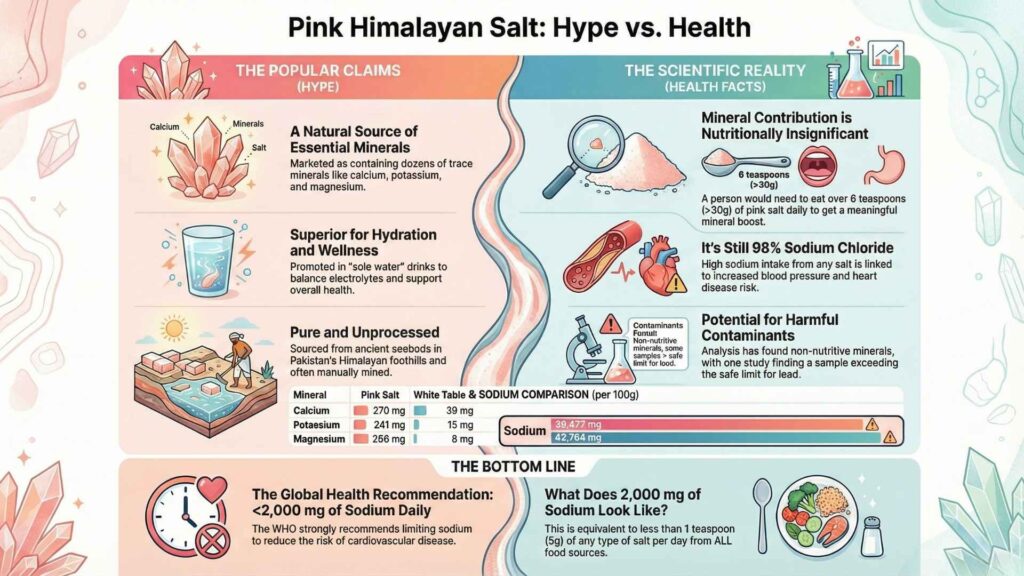
Supporters of the pink salt diet often mention 84 different trace elements. These include macro-minerals like calcium, potassium, and magnesium. It also contains trace elements like iron, zinc, and selenium. In a gram-for-gram comparison, pink salt shows higher levels of these nutrients than refined salt.
| Mineral (mg per gram) | Pink Himalayan Salt | Table Salt |
| Calcium | 1.6 | 0.4 |
| Potassium | 2.8 | 0.9 |
| Magnesium | 1.06 | 0.0139 |
| Iron | 0.0369 | 0.0101 |
| Sodium | 368.0 | 381.0 |
The analysis shows that table salt contains slightly more sodium. Pink salt provides a broader spectrum of secondary minerals. However, nutritionists like Natalie Allen, RD, offer a reality check. She notes that these minerals exist in very small quantities. They are unlikely to provide measurable health benefits through salt alone. To meet your daily potassium needs through pink salt, you would need 1.7 kilograms of it. This amount would be toxic due to the extreme sodium load.
The Pink Salt Diet and Metabolic Transformation
The primary allure for fitness beginners is the promise of fast results. Many believe pink salt can accelerate weight loss or “reset” the metabolism. Viral trends like the “21-Day Pink Salt Reset” are common. These trends encourage a morning tonic of warm water, lemon, and a pinch of salt. The belief is that this mixture stimulates fat oxidation.
Metabolism and the Myth of Fat Burning
Metabolic rate is a function of muscle mass and activity levels. Genetics and age also play major roles. No clinical evidence suggests that NaCl has fat-burning properties. Registered dietitian Natalie Rizzo states there is no research-backed mechanism for this. Pink salt cannot speed up how your body converts calories into energy.
What many perceive as weight loss is often a shift in fluid balance. High sodium intake can cause the body to retain water. This leads to temporary bloating. Conversely, the ritual might lead someone to replace high-calorie drinks. They might also practice more mindful eating. This resulting caloric deficit is the true driver of fat loss. Sustainable transformation requires consistent behavioral frameworks. You can find structured guidance at (https://test.dietdekho.com/form/).
The Role of Hydration in Appetite Regulation
The pink salt diet works closely with the principles of hydration. Many people suffer from mild chronic dehydration. The brain often misinterprets this as hunger. When a pinch of salt is added to water, sodium acts as an electrolyte. This facilitates the movement of water into the cells.
This prevents the water from simply being excreted as urine. It allows for deeper cellular rehydration. Properly hydrated cells function more efficiently. This leads to improved energy levels and fewer snacks. Here’s the thing: the salt is not “melting” fat. It is simply optimizing your body’s fluid environment.

Electrolyte Balance and Physical Performance
For fitness enthusiasts, pink salt is a natural alternative to sports drinks. Commercial drinks often contain refined sugars and artificial dyes. Electrolytes are minerals that carry an electrical charge. They are essential for maintaining cell membrane voltage. This potential allows nerves to send signals and muscles to contract.
Muscle Contraction and Cramp Prevention
The body loses sodium and other minerals through sweat during exercise. A deficiency in these electrolytes can lead to muscle weakness. It also causes fatigue and painful cramps. Magnesium is a critical co-factor for over 300 enzymatic reactions. This includes reactions involved in muscle relaxation.
| Electrolyte | Primary Function | Potential Deficiency Symptom |
| Sodium (Na+) | Fluid balance, nerve impulses | Muscle cramps, dizziness, fatigue |
| Potassium (K+) | Heart rhythm, muscle function | Weakness, irregular heartbeat |
| Magnesium (Mg2+) | Energy production, relaxation | Spasms, insomnia, anxiety |
| Calcium (Ca2+) | Bone health, muscle signaling | Numbness, brittle bones |
Using pink salt in a post-workout drink helps the sodium-potassium pump. This ensures the body recovers efficiently from physical stress. This is very useful for those in hot climates. It also helps those doing high-intensity interval training (HIIT).
The Ketogenic Connection
The pink salt diet has a dedicated following in the keto community. When you reduce carbohydrate intake, insulin levels drop. This signals the kidneys to stop retaining sodium. The kidneys then start excreting it through urine.
This rapid loss of sodium is the primary cause of the “keto flu.” Symptoms include headaches, brain fog, and extreme lethargy. To mitigate these effects, experts like Dr. Anthony Gustin suggest more salt. Keto practitioners may need an extra 1 to 2 teaspoons per day. Pink Himalayan salt is preferred because it is a raw, unrefined source.

Digestive Health and the Acid-Base Myth
A common claim is that pink salt balances pH levels. Some say it creates an “alkaline” environment to prevent disease. From a clinical standpoint, the lungs and kidneys regulate blood pH. They keep it within a very narrow range of 7.35 to 7.45. Dietary salt intake is insufficient to change this balance.
Hydrochloric Acid Production and Gut Motility
What this really means is that pink salt influences the stomach environment. Sodium chloride is a necessary precursor for hydrochloric acid (HCl). Sufficient stomach acid is vital for breaking down proteins. It also helps sterilize food-borne pathogens.
Ayurvedic traditions use “sole water” as a digestive aid. This is water saturated with pink salt. Anecdotal reports suggest this can reduce bloating before meals. It may also encourage peristalsis in the digestive tract.2 While clinical evidence is limited, the role of sodium in gastric function is a fact.
Comparative Analysis: Pink Salt vs. Alternative Salts
Is the pink salt diet superior to other options? We must compare it against refined table salt and sea salt. The National Heart, Lung, and Blood Institute (NHLBI) provides clear guidelines. They emphasize that total sodium volume is the most critical factor for heart health.
Sodium Density and Teaspoon Volume
One advantage of pink salt is its physical structure. It often comes in larger, coarse crystals. A single teaspoon may contain less sodium by weight than fine table salt.
| Salt Type | Sodium per Teaspoon (Approx.) |
| Iodized Table Salt (Fine) | 2,300 mg |
| Himalayan Pink Salt (Coarse) | 2,200 mg |
| Sea Salt (Fine) | 2,120 mg |
| Kosher Salt (Coarse) | 1,920 mg |
| Fleur de Sel | 1,560 – 2,320 mg |
Data from Harvard Health indicates that sodium content per gram is nearly identical. However, larger crystals lead to lower intake if you measure by the spoonful. This habit encourages more intentional seasoning.
The Iodine Deficiency Dilemma
A significant risk of this diet is iodine deficiency. Most table salt has been fortified with iodine since 1924. This promotes healthy thyroid function. Himalayan pink salt is typically not iodized. Iodine is available in seafood and dairy. However, many people rely on salt as their primary source.
A total shift to pink salt could lead to thyroid issues. This highlights the importance of a balanced plan. You can see more about balanced nutrition at (https://test.dietdekho.com/form/).

Clinical Evidence and Cardiovascular Risks
The wellness industry promotes pink salt as “heart-healthy.” However, clinical research suggests the body processes all sodium the same way. Excess sodium is a primary driver of high blood pressure. This increases the risk of heart disease and stroke.
The Brazilian Hypertension Study
A clinical trial in Brazil compared pink salt and table salt. Seventeen female patients with hypertension participated. The results showed no significant differences in blood pressure. Urinary sodium concentrations remained comparable. This suggests pink salt offers no “low-sodium” advantage for cardiac health.
Heavy Metal Contamination and Safety Standards
Because pink salt is unrefined, it may contain heavy metals. An Australian study analyzed various samples. They found wide fluctuations in mineral content. One sample even contained lead levels exceeding safety limits.
| Mineral Type | Potential Health Impact | Presence in Pink Salt |
| Nutrient Minerals | Bone health, nerve function | Ca, Mg, K, Fe, Zn |
| Non-Nutrient Minerals | No known health benefit | Al, Ba, Si, S |
| Potential Toxins | Organ damage, neurological issues | Pb, Hg, As (Trace) |
Most commercial pink salt in the U.S. meets safety standards. However, the presence of aluminum or sulfur is a consideration. Pink salt is not necessarily “safer” than refined salt. It simply presents different impurities.
Behavioral Rituals and the Psychology of Weight Loss
If physiological benefits are subtle, why do people swear by it? The answer lies in the behavioral reset of a ritual. Starting the day with a deliberate act provides a psychological anchor.
The “Clean Start” Phenomenon
This ritual signals that your health journey has begun for the day. This mindfulness often spills over into other choices. It leads to more home cooking and less processed food. In this sense, the pink salt trick is a gateway habit.
Research shows people who drink more water in the morning stay hydrated. The salt itself doesn’t boost metabolism, but the habit improves adherence. Beginners should pair these rituals with a weight loss meal plan. Focus on fiber, protein, and consistency.

Practical Integration of Pink Salt into a Healthy Lifestyle
The goal should not be to consume more salt. Instead, use high-quality salt more effectively.
Recommended Recipes for Hydration and Recovery
- Morning Hydration Drink: 8 ounces of warm water, juice from 1/2 a lemon, and a pinch of pink salt.
- Post-Workout Electrolyte Blend: 16 ounces of water, a pinch of salt, a teaspoon of honey, and lime.
- Mindful Cooking: Use pink salt as a finishing salt. Sprinkle it onto food just before serving for intense flavor.
Precautions and Contraindications
Pink salt is generally safe for healthy adults. However, some groups should avoid it. This includes individuals with kidney disease or heart conditions. Excessive intake can lead to headaches and swelling.
The Future of Pink Salt in Clinical Nutrition
Ongoing research explores the nuances of alternative salts. Preliminary animal studies suggest pink salt may have fewer cognitive risks than refined salt. This might be due to lower processing levels. Human clinical trials are still necessary to confirm these effects.
The National Institutes of Health (NIH) emphasizes reducing processed foods. These account for over 70% of average sodium intake. Success in any fitness journey requires moderation. Focus on whole, nutrient-dense foods regardless of your salt choice.
Conclusions and Recommendations
The pink salt diet bridges ancient wisdom and modern trends. It is not a magic bullet for fat loss. However, it offers a more natural alternative to refined salts. Its true value lies in supporting hydration and physical performance. It also serves as a cornerstone for mindful morning rituals.
Sustainable weight loss requires a larger toolkit. Lasting transformation comes from professional guidance. Visit (https://test.dietdekho.com/form/) for evidence-based strategies. Focus on whole foods and proper hydration to reach your goals.

Frequently Asked Questions
Is the pink salt diet effective for weight loss?
No clinical evidence shows pink salt directly causes fat loss. It supports weight loss indirectly through better hydration and healthier routines.
Can I use pink salt to replace regular table salt?
Yes, but you must get iodine from other sources. Pink salt is typically not iodized, unlike standard table salt.
How does pink salt help with the “keto flu”?
Keto diets cause the body to excrete more sodium. Pink salt replenishes these lost electrolytes. This reduces headaches and muscle cramps.
Is pink salt safer than white table salt?
It is less processed and has fewer additives. However, it is not “low sodium.” Its effect on blood pressure is similar to regular salt.
What is the “pink salt trick” for bloating?
This involves drinking warm water with lemon and pink salt. It can stimulate digestion but may cause water retention if overused.
BOOK YOUR APPOINTMENT
Abhinav is the Founder of Diet Dekho, helping people manage weight and lifestyle health through simple, practical nutrition and personalized diet plans.