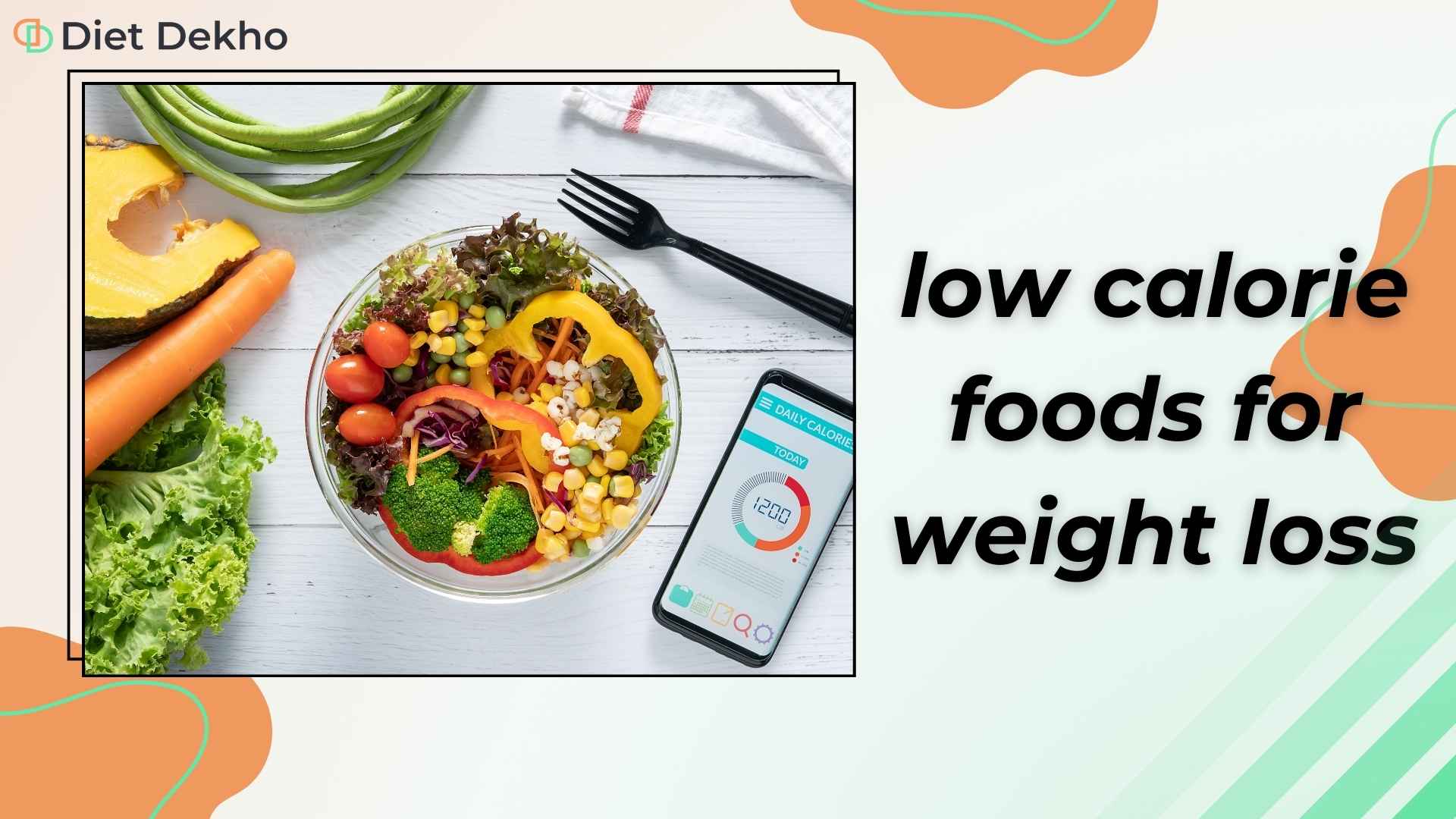
Does weight loss feel like a constant battle with hunger, especially when your search for a sustainable Indian weight loss meal plan leads to restrictive diets? Achieving a permanent results requires identifying specific low calorie foods for weight loss that provide high volume and nutrition without the energy surplus that leads to fat storage. This guide examines how local staples like Lauki, Makhana, and various millets can be strategically integrated into a busy routine to manage weight while supporting medical conditions like PCOS, diabetes, and hypertension.
The most effective low calorie foods for weight loss in an Indian context include water-rich vegetables like bottle gourd (Lauki), high-fiber snacks like fox nuts (Makhana), and protein-packed legumes such as sprouted moong dal. By focusing on energy-dilute foods that provide high satiety through fiber and protein, individuals can naturally reduce total calorie intake while managing metabolic health and hormonal balance.

Table of Contents
- 1 Why does weight loss feel like a constant battle with hunger?
- 2 Is the frustration of strict diets causing more harm than good?
- 3 Why completely cutting out calories actually stops progress?
- 4 Understanding the role of calorie density and satiety in your Indian lifestyle
- 5 The definitive list of Indian low calorie foods for weight loss
- 6 A simple full-day meal structure incorporating low calorie Indian staples
- 7 Addressing medical conditions: PCOS, Diabetes, Thyroid, and BP
- 8 Common Mistakes to Avoid: The “Diet” Snack Trap
- 9 Practical Meal Prep Hacks for Busy Lifestyles
- 10 Remember, slow and steady changes lead to permanent results
Why does weight loss feel like a constant battle with hunger?
The biological drive to seek energy is a fundamental survival mechanism, yet in the modern landscape, this drive often clashes with an environment filled with calorie-dense, low-nutrient options. Weight loss often feels like a struggle because traditional dieting approaches emphasize restriction rather than the strategic selection of low calorie foods for weight loss. When the body experiences a sudden drop in energy intake, it triggers a cascade of hormonal responses, including an increase in ghrelin (the hunger hormone) and a decrease in leptin (the satiety hormone), making the sensation of hunger nearly impossible to ignore.
In our context, the transition from labor-intensive lifestyles to sedentary urban routines has created a metabolic mismatch. Data from the National Family Health Survey-5 (NFHS-5) reveals that the number of heavier individuals has more than doubled in the last 15 years, with nearly 24% of women and 23% of men now falling into higher weight categories. This rise is fueled by the easy availability of high-fat, sugar, and salt (HFSS) foods that provide high calories but very little “fullness,” leading to a cycle of constant snacking and energy surplus.
Furthermore, the social structure of Indian households often centers around food, making it difficult for individuals to deviate from family meals. The feeling of being “drained and empty” during a diet usually stems from a lack of “volume eating,” where the stomach does not physically feel full despite having consumed a specific number of calories. By shifting the focus toward an Indian weight loss meal plan that utilizes indigenous, high-volume foods, the battle with hunger can be mitigated through biological satiety rather than willpower alone.
Understanding the National Health Shift
The following table highlights the alarming shift in the weight status of the population as recorded by the NFHS-5, emphasizing why a specialized Indian vegetarian diet for weight loss is more important than ever.
| Demographic Group | NFHS-3 (2005-06) | NFHS-5 (2019-21) | Increase (%) |
| Adult Women (15-49 years) | 12.6% | 24.0% | 90.5% |
| Adult Men (15-49 years) | 9.3% | 22.9% | 146.2% |
| Children (<5 years) | 1.6% | 3.4% | 112.5% |
| Adolescent Girls (15-19) | 2.4% | 5.4% | 125.0% |
| Adolescent Boys (15-19) | 1.7% | 6.6% | 288.2% |
Note: Figures represent the percentage of individuals in higher weight categories (BMI ≥ 25).
Is the frustration of strict diets causing more harm than good?
Many individuals feel frustrated by strict diets that leave them feeling drained and empty because these regimens often ignore the physiological need for balanced nutrition. Standard restrictive diets frequently eliminate entire food groups, which can lead to micronutrient deficiencies and a slowed metabolism. In our setting, where vegetarianism is common, cutting out staples without providing adequate weight loss diet foods as substitutes can result in fatigue, hair loss, and irritability.
The psychological toll of restriction is also significant. When a diet feels like a “punishment,” the likelihood of consuming excessively on high-calorie comfort foods increases. This “yo-yo dieting” cycle is particularly damaging for those managing PCOD/PCOS or thyroid disorders, as extreme fluctuations in energy intake can further disrupt hormonal balance. Instead of extreme restriction, a focus on healthy low calorie snacks and high-volume meals allows the individual to feel satisfied while still maintaining a caloric deficit.
The modern professional, often juggling long commutes and high-stress environments, requires a diet plan for weight loss Indian lifestyles can actually support. A diet that is too low in carbohydrates can lead to “brain fog” and reduced productivity. Conversely, a diet too high in refined carbs leads to energy crashes. The middle ground lies in choosing low calorie food list items that are rich in complex carbohydrates and fiber, such as millets and pulses, which provide a steady release of energy.
Why completely cutting out calories actually stops progress?
A common misconception is that “starvation mode” is the fastest way to lose weight. In reality, severe calorie restriction triggers a process known as adaptive thermogenesis. When energy intake falls below a critical threshold, the body perceives a threat to its survival and begins to conserve energy. This results in a significant reduction in the basal metabolic rate (BMR), meaning the body burns fewer calories at rest.
The body also becomes more efficient at performing tasks, requiring less energy for movement, and the non-exercise activity thermogenesis (NEAT)—the calories burned through daily chores—decreases as the person becomes more lethargic. Furthermore, extreme dieting often leads to the loss of lean muscle mass. Since muscle tissue is more metabolically active than fat tissue, losing muscle further lowers the metabolic rate.
For those in an Indian household, a sudden shift to “zero calorie” attempts often leads to “rebound weight gain.” Once the individual returns to normal habits, the slowed metabolism causes the body to store calories as fat more aggressively. The ICMR-NIN guidelines stress that extreme approaches are hazardous and that a balanced Indian diet for weight loss, focusing on quality over drastic quantity cuts, is essential for long-term health.
The Science of Adaptive Thermogenesis
| Process | Biological Response to Extreme Restriction | Impact on Weight Loss |
| BMR Adjustment | Thyroid hormone production decreases | Fewer calories burned at rest |
| Hormonal Shift | Leptin (satiety) drops; Ghrelin (hunger) rises | Constant, intense hunger and cravings |
| NEAT Reduction | Unconscious decrease in movement | Reduced total daily energy expenditure |
| Muscle Loss | Body breaks down muscle tissue for energy | Lowered metabolic capacity |
| Thermic Effect | Less food consumed means less energy for digestion | Minor drop in daily calorie burn |
Understanding the role of calorie density and satiety in your Indian lifestyle
To successfully navigate an Indian diet for weight loss, one must understand the relationship between calorie density and satiety. Calorie density refers to the number of calories in a specific weight of food ($kcal/g$). Satiety is the feeling of fullness and satisfaction that stops us from eating. Foods that are low in calorie density allow you to eat a larger volume of food, which physically fills the stomach and triggers satiety signals to the brain.
In the Indian kitchen, two main factors influence calorie density: water and fiber. Water adds weight and volume with zero calories. Fiber adds bulk and takes longer to digest, keeping the stomach full for longer. For example, a medium bowl of Lauki (bottle gourd) sabzi is mostly water and fiber, making it very low in energy density, whereas a small piece of deep-fried Samosa is high in fat and low in water, making it extremely calorie-dense.
Protein also plays a critical role in satiety by influencing the release of fullness hormones. Any effective Indian weight loss meal plan must prioritize plant-based proteins such as moong dal, chickpeas, and paneer to ensure that you do not feel hungry shortly after eating. Combining a low-calorie-dense food (like a salad) with a high-protein food (like sprouts) is the ultimate strategy for weight management.
Energy Density of Common Food Components
| Food Category | Energy Density (kcal/g) | Satiety Level | Weight Loss Strategy |
| Non-starchy Veggies (Lauki, Spinach) | 0.1 – 0.3 | High | Eat in unlimited portions |
| Whole Fruits (Apple, Guava) | 0.4 – 0.6 | Moderate | Excellent for snacking |
| Cooked Grains/Legumes (Dal, Rice) | 1.0 – 1.4 | Moderate | Fill 1/4th of the plate |
| Lean Proteins (Egg whites, Fish) | 1.0 – 1.5 | High | Include in every major meal |
| Dry Snacks (Makhana, Popcorn) | 3.5 – 4.0 | High (by volume) | Good for evening hunger |
| Fats and Oils (Ghee, Butter) | 8.0 – 9.0 | Low | Use very sparingly |

The definitive list of Indian low calorie foods for weight loss
Transitioning to a healthier weight does not require “foreign” superfoods. The Indian landscape offers a rich low calorie food list that is affordable, accessible, and scientifically backed.
Lauki (Bottle Gourd): The Hydration Hero
Lauki is arguably the king of low calorie foods for weight loss. With only about 14-15 calories per 100g, it is nearly 95% water. It is incredibly easy to digest and is often recommended for those with digestion issues or hypertension. For a weight loss plan, it can be consumed as a soup, a simple stir-fried sabzi, or integrated into wheat dough to make “Lauki Parathas” that are lower in calorie density.
Makhana (Fox Nuts): The Ultimate Evening Snack
For the professional working late hours, Makhana is a savior. A 30g serving provides approximately 104 calories but offers a significant volume of crunchy food. Makhana is low in sodium and saturated fats, making it safe for those with hypertension. When dry-roasted with a pinch of turmeric and black salt, it satisfies the need for a “crunchy” snack without the caloric load of potato chips.
Sprouts and Moong Dal: The Protein Anchors
In an Indian vegetarian diet for weight loss, protein is often the missing link. Sprouts (moong, chana, or moth) provide approximately 29-30 calories per 100g and are packed with fiber and protein. The sprouting process increases the bioavailability of nutrients, boosting metabolism. Moong dal is another light, protein-rich option that can be used to make “Chillas” (savory pancakes) which serve as an excellent low-calorie breakfast.
Millets (Ragi, Jowar, Bajra): The Complex Carb Power
The 2024 ICMR-NIN guidelines put a strong emphasis on millets. While grains are more calorie-dense than vegetables, millets like Ragi are superior to refined wheat because they are rich in fiber and calcium. Ragi has a low glycemic index, making it one of the best weight loss diet foods for people with diabetes or PCOS as it prevents sudden insulin spikes.
Nutritional Comparison of Popular Indian Low Calorie Options
| Food Item | Calories (per 100g) | Primary Benefit | Best Way to Consume |
| Cucumber | 15 kcal | Ultra-hydration | Raw in salads or raita |
| Lauki (Bottle Gourd) | 14-15 kcal | High volume | Soup or steamed sabzi |
| Spinach (Palak) | 23 kcal | Iron boost | Added to dal or soup |
| Sprouts (Moong) | 29-30 kcal | High satiety | Chaat with lemon |
| Papaya | 43 kcal | Digestive enzymes | Mid-morning snack |
| Roasted Chana | 164 kcal (30g) | Sustained energy | On-the-go snack |
A simple full-day meal structure incorporating low calorie Indian staples
The key to a successful Indian weight loss meal plan is consistency and structure. One does not need to eat “different” food from the family, but rather adjust the proportions and cooking methods.
Early Morning (7:00 AM – 8:00 AM)
Start the day by hydrating the system. A glass of warm water with lemon or jeera (cumin) water can help kickstart the metabolism. Pair this with 5 soaked almonds to provide healthy fats and signal the body that it is being fueled.
Breakfast (8:30 AM – 9:30 AM)
Focus on a combination of fiber and protein. A Moong Dal Chilla loaded with grated carrots or a bowl of Oats Upma with plenty of vegetables are excellent options for an Indian vegetarian diet for weight loss. These meals provide a slow release of energy, keeping hunger away.
Mid-Morning Snack (11:00 AM – 11:30 AM)
If hunger strikes before lunch, choose a whole fruit like a medium-sized apple or a bowl of papaya. Avoid fruit juices, as they lack fiber and cause a rapid sugar spike.

Lunch (1:00 PM – 2:00 PM)
This is the core of your diet plan for weight loss Indian style. Fill half the plate with a fresh salad and a cooked vegetable like Bhindi Masala or Lauki Sabzi. The other half should be divided between a protein source (dal or curd) and a small portion of complex carbs (one ragi or bajra roti).
Evening Snack (4:30 PM – 5:30 PM)
Instead of biscuits, opt for a handful of Roasted Makhana or Roasted Chana with a cup of green tea. This satisfies the afternoon hunger without ruining your caloric deficit.
Dinner (7:30 PM – 8:30 PM)
Dinner should be the lightest meal of the day. A clear vegetable soup followed by a small portion of Vegetable Dalia or Paneer Bhurji with stir-fried beans is ideal.
Addressing medical conditions: PCOS, Diabetes, Thyroid, and BP
Weight loss is often a clinical necessity. Choosing the right low calorie foods for weight loss can directly improve disease markers.
Managing PCOS and Diabetes
Both conditions are influenced by insulin resistance. The goal is to eat foods that have a low Glycemic Index (GI). High-fiber vegetables like broccoli and leafy greens are essential as they slow down the absorption of sugar. For those with PCOS, adding anti-inflammatory spices like cinnamon can improve insulin sensitivity.
Supporting Thyroid Health
In hypothyroidism, the metabolic rate is lower, making calorie control vital. However, one must be careful with “goitrogens” in raw vegetables like cabbage. The solution is simple: always cook these vegetables. Heat neutralizes the effect, making them safe and effective weight loss diet foods.
Controlling Hypertension (The DASH Approach)
The DASH approach focuses on reducing sodium and increasing minerals that lower blood pressure. For a heavier person with high BP, this means replacing salty pickles with fresh lemon and herbs. Foods like coconut water and white pumpkin are excellent high-potassium additions to any Indian weight loss meal plan.
Recommended Foods for Specific Medical Conditions
| Condition | Key Dietary Focus | Best Food Additions | Foods to Limit |
| PCOD / PCOS | Insulin sensitivity | Cinnamon, Flaxseeds, Leafy greens | Maida, Sugary drinks |
| Diabetes | Glycemic control | Millets, Karela, Methi, Dals | White rice, Jaggery |
| Thyroid | Metabolism | Iodized salt, Eggs, Cooked broccoli | Raw cabbage/soy |
| Hypertension | Sodium reduction | Lauki, Buttermilk, Garlic, Bananas | Pickles, Papads |
Common Mistakes to Avoid: The “Diet” Snack Trap
Many seekers fall into the trap of buying “diet” biscuits and processed “low-fat” snacks. In reality, these are often the hidden reasons for weight loss plateaus.
The Problem with “Digestive” Biscuits
While many brands market themselves as healthy low calorie snacks, labels often reveal a different story. Commercial “digestive” biscuits are frequently high in palm oil and contain significant amounts of refined flour (maida). In many cases, a digestive biscuit has more calories and fat than a simple Marie biscuit.
Furthermore, “sugar-free” options often use maltitol. While it has fewer calories, it still has a glycemic index that can cause an insulin spike and stall weight loss. It can also cause bloating if you find yourself over-indulging.
The Deception of “Low-Fat” Namkeens
Many “baked” mixtures are sprayed with invisible fats to make them crispy. Because the fat isn’t visible, people tend to consume excessively, inadvertently taking in more calories than they would from a smaller portion of a regular snack. Stick to whole-food snacks where you control the preparation, such as home-roasted makhana.
Comparison of Biscuits: Marketing vs. Reality
| Biscuit Type (Per 100g) | Calories | Total Fat | Verdict |
| Standard Marie | ~400-420 kcal | ~12g | High calorie, low fiber |
| Commercial Digestive | ~470-490 kcal | ~20g | Often higher in fat than Marie |
| Sugar-Free / Lite | ~450 kcal | ~18g | Spikes insulin; stalls loss |
| Better: Guava | 51 kcal | 0.9g | Superior in every way |
| Better: Chana | 364 kcal | 6g | High satiety, high protein |

Practical Meal Prep Hacks for Busy Lifestyles
Time is often the biggest enemy of a healthy diet. However, with a few hacks, you can ensure you always have low calorie foods for weight loss ready to eat.
The “Batter and Base” Method
- Batter: Prepare a large jar of moong dal or besan chilla batter on Sunday. It stays fresh for 3-4 days for a 5-minute healthy breakfast.
- Base: Sauté a large batch of onion, ginger, and garlic in minimal oil. Store this “tadka” in the fridge to add to boiled dal or vegetables during the week.
The “Pre-Cut and Steam” Strategy
Hard vegetables like beans and carrots can be washed and 75% steamed in advance. This prevents the temptation of fast food, as a healthy stir-fry can be assembled in minutes.
Snacking on the Go for NRIs and Travelers
For those living abroad, finding “desi” snacks can be hard.
- Carry small bags of roasted makhana or peanuts.
- If Indian vegetables aren’t available, substitute Lauki with Zucchini and Palak with Kale; the benefits are almost identical.
- Use Chayote Squash as a 1:1 substitute for many Indian gourds in curries.
Remember, slow and steady changes lead to permanent results
Weight loss is a marathon of small, consistent choices. I know it’s hard to find time, but focusing on the quality of your plate is the first step toward holistic health. What this means for your daily routine is that you don’t need to be perfect every day—you just need to be better than you were yesterday.
In simple terms, weight loss happens when you treat your body with respect, fueling it with the low calorie foods for weight loss it needs to thrive. Whether you are a heavier person managing PCOS or simply trying to feel more energetic, the Indian kitchen has all the tools you need for a successful Indian vegetarian diet for weight loss.

FAQs on Low Calorie Foods for Weight Loss
1. Which Indian food is best for losing weight fast?
While no “magic” food exists, Lauki (bottle gourd) and Sprouts are among the most effective. Lauki is extremely low in calories, while sprouts provide high protein and fiber, which keeps you full for longer, preventing the excessive consumption that stalls a diet plan for weight loss Indian followers can stick to.
2. Can I eat rice in an Indian weight loss meal plan?
Yes, but portion control is key. Opt for brown rice or millets like Jowar, as they have more fiber. Always pair your rice with a double portion of dal and vegetables to lower the overall glycemic index of the meal.
3. Are Marie biscuits good for weight loss?
Marie biscuits are lower in fat than cream biscuits, but they are still made of refined flour and sugar. They provide “empty calories” and do not help with satiety. A better low-calorie snack would be roasted makhana or whole fruit.
4. How can I manage family food pressure while dieting?
It can be difficult when family equates food with love. Polite assertiveness is key. Explain your goals sweetly and try filling your plate with salads and vegetables first before the heavier items are served. You can also request to have the “extra” food packed for later rather than eating it immediately.
Ready for an Indian weight loss meal plan that works for your unique body? Book a consultation with a Diet Dekho expert today for your personalized weight loss chart.
(https://test.dietdekho.com/form/)
Disclaimer:
This blog post was written to help you make healthier food choices altogether. So, be aware and take care. The important thing to consider is your health before starting a restrictive diet. Always seek advice from a doctor or dietitian before starting if you have any concerns.

Dr. Ritika is a nutrition and lifestyle expert with 2+ years of experience, helping clients manage weight and health through practical, personalized diet plans.